
Do Programming Languages Still Matter?
Contents
A friend and I were talking about how we each use AI these days when he mentioned that the programming language doesn’t matter anymore.
He spent most of his career as a Senior Staff Android engineer, the kind of person who chases a bug out of his own code, down into the Android SDK and comes back having found the problem in something Google shipped. If anyone has a vested interest in programming languages continuing to matter, it’s him. He built a career going deep on one platform.
I sat with his remark for a while and kept circling a different question. Did it ever really matter? And if it did, to whom?
Did It Ever Matter?#
When I think about the best engineers I’ve worked with and what actually made them stand out, knowing a specific language was never on the list.
What stood out was judgment. They could see around corners. They knew when to say no. They could influence a whole system and not just the piece of it they owned.
Matter To Who Though?#
The person using the app couldn’t tell you what it’s written in. They care whether it opens before they lose patience. Whether it drains their battery on a travel day. Whether it loses the thing they just typed. Whether it still works on bad hotel wifi. Whether the button they tapped did what they expected it to do. Whether it asks for their contacts for a reason they can understand.
Not one of those is a language question. Nobody has ever picked an app because it was written in Kotlin. Nobody has ever deleted one because it wasn’t.
Companies hiring engineers are a different question. A company with ten years of Go behind it hires for Go because ramping someone up on an unfamiliar language used to be slow. Months before they were productive, longer before you’d trust them on call at 2am. Paying for someone who already knew Go beat paying for someone to learn it.
That’s the part I wondered for myself. If AI can write any language on demand, does the reason to screen for a specific one collapse with it?
The People With the Best Seat in the House#
My curiosity led me to look at what the companies leading the AI space were doing. The ones building the models.
OpenAI, iOS Engineer, Applied Foundations[1]:
Are fluent in Swift and familiar with the Apple development ecosystem (Xcode, UIKit, SwiftUI)
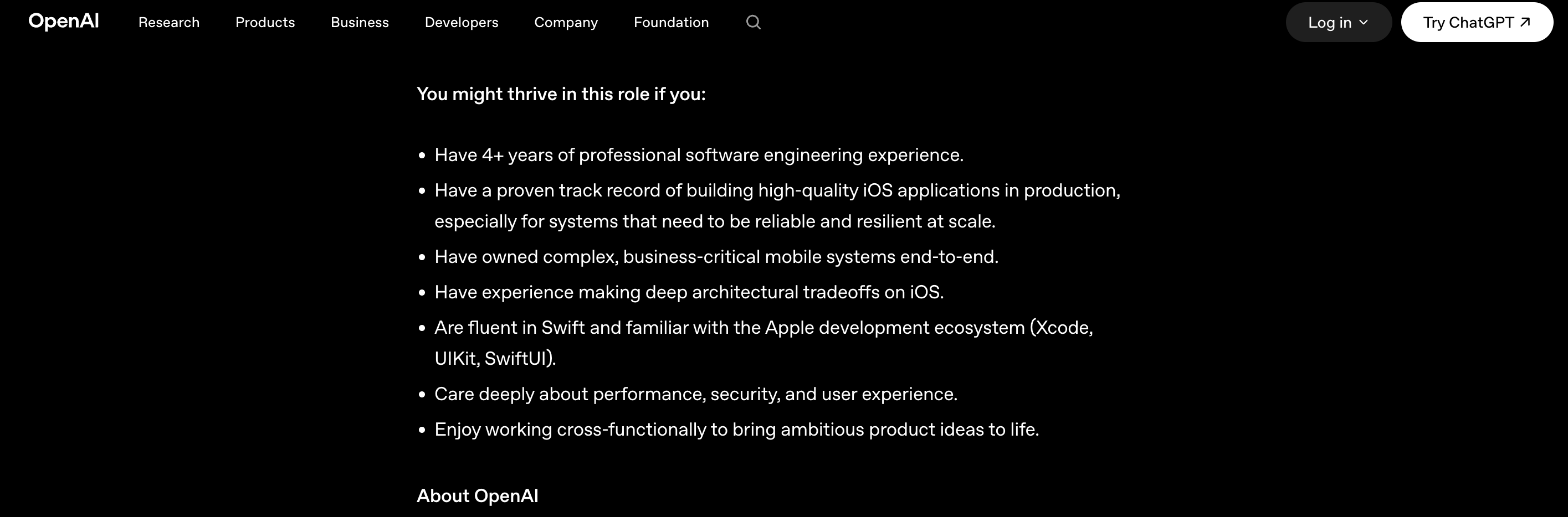
OpenAI, iOS Engineer, Applied Foundations.
Anthropic, Staff Software Engineer, Android[2]:
Expertise in Kotlin, Jetpack Compose, Android SDK and the broader Android ecosystem
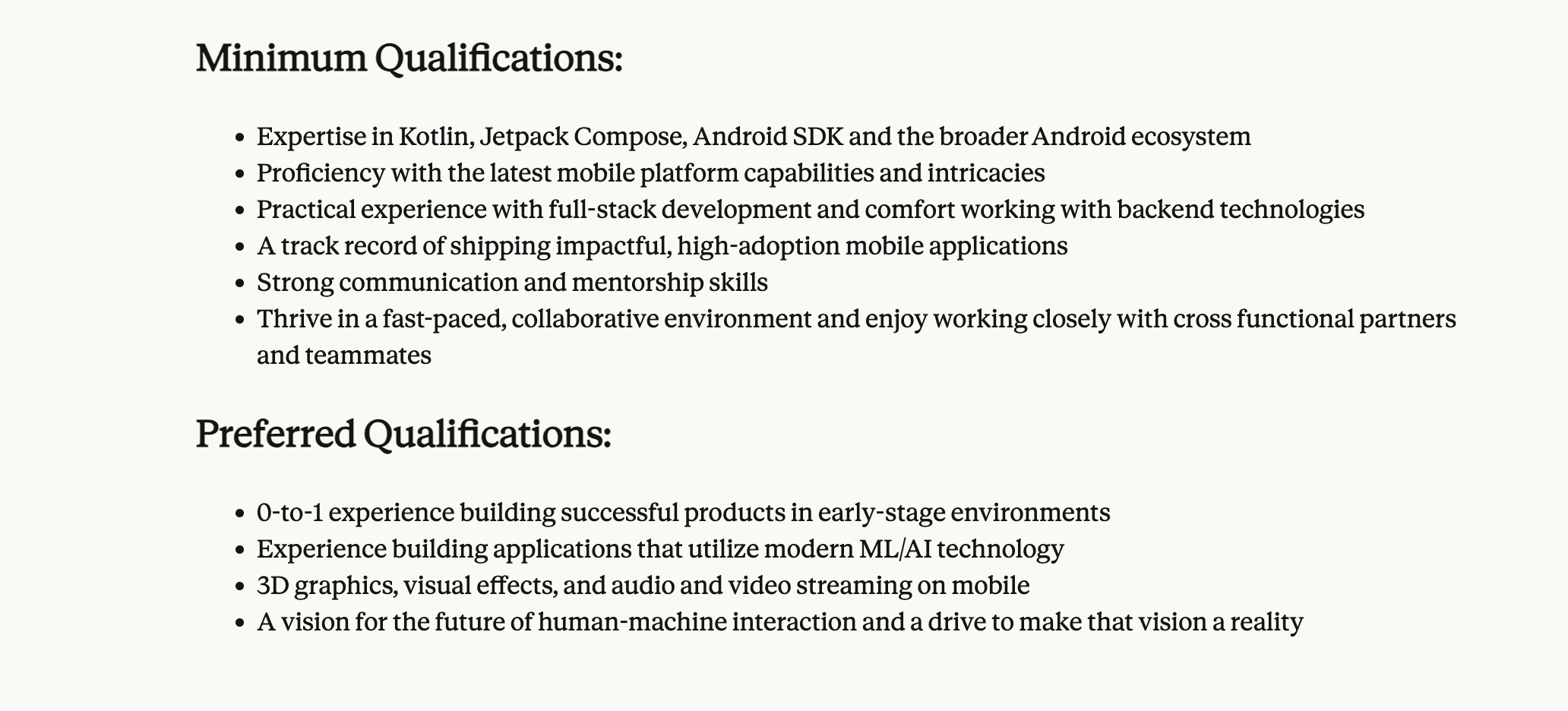
Anthropic, Staff Software Engineer, Android.
xAI, Software Engineer - Linux Kernel (C++, C)[3]:
Hands-on systems programming experience in C or C++.
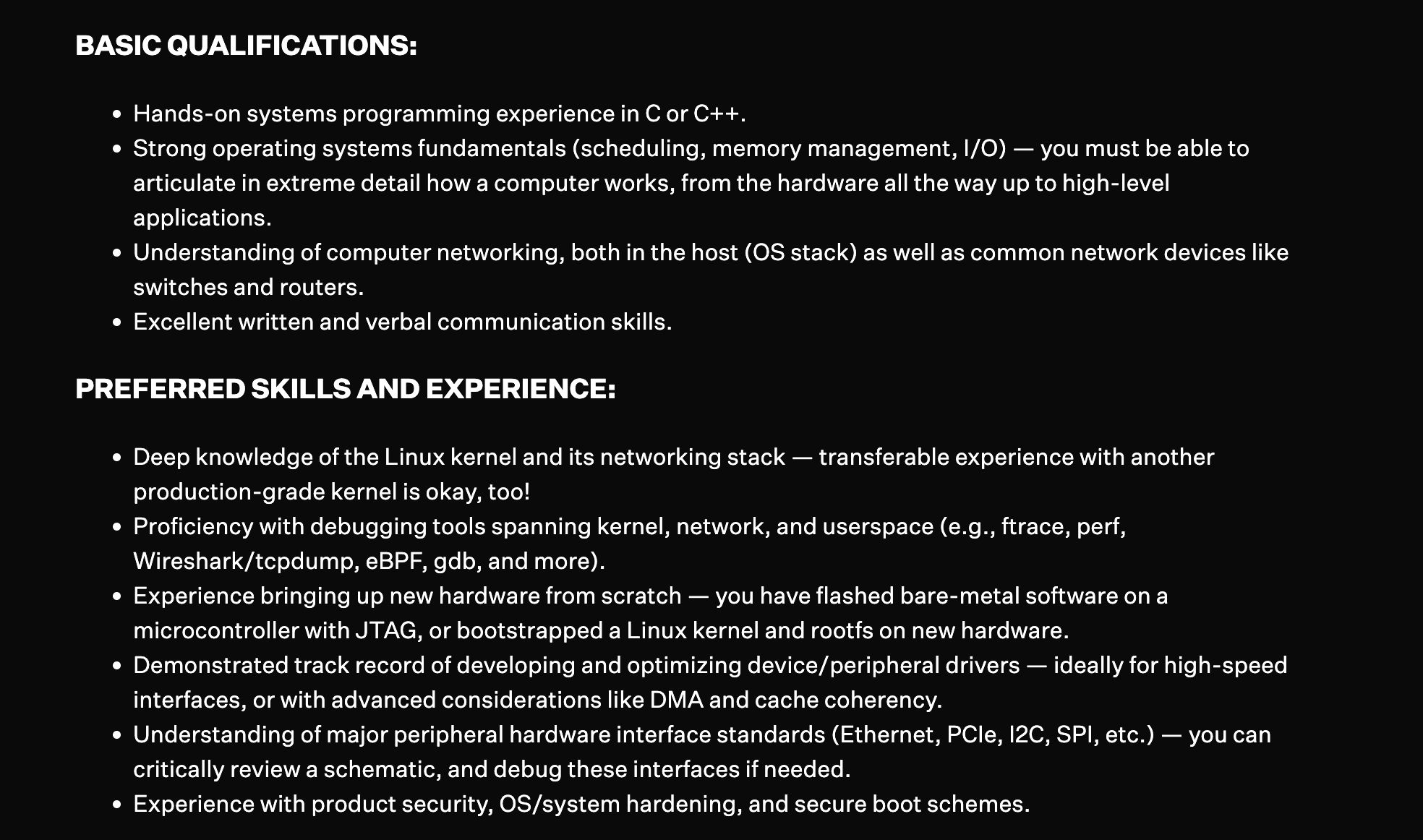
xAI, Software Engineer - Linux Kernel (C++, C).
Every one of those asks for a named language. Swift, Kotlin, C or C++. These are people using models we haven’t seen yet. If knowing a specific language were weeks away from worthless, they would know first and stop asking for it first.
I Went and Counted#
Three job postings is an anecdote. So I pulled every open posting from 40 companies and kept the individual contributor engineering roles listed in the last 90 days. That left 842 live listings.
- Frontier labs: Anthropic, OpenAI and xAI.
- Large tech, public or late stage: Stripe, Databricks, Coinbase, Reddit, GitLab, Robinhood, Instacart, Affirm and Figma.
- Mid-stage growth, Series C and beyond: Brex, Scale AI, Ramp, ElevenLabs, Harvey, Cohere, Discord and Decagon.
- Early stage, seed through Series B, mostly under 200 people: Linear, Replit, Supabase, PostHog, Modal, Warp, Exa and thirteen others.
Then I asked the simplest version of my question. How many of these roles expect you to already know a specific programming language?
A language listed as nice to have counts the same as one listed as required.
| Roles | Share | |
|---|---|---|
| No language named | 244 | 29% |
| One or more named | 598 | 71% |
So languages still get named, constantly. That number isn’t even across the board though. It moves with the size of the company.
| Stage | Companies | Eng roles | Roles naming a language |
|---|---|---|---|
| Frontier labs | 3 | 203 | 62% |
| Large tech | 9 | 350 | 78% |
| Mid-stage growth | 8 | 173 | 61% |
| Early stage | 20 | 116 | 81% |
The smallest companies name a language most often. My assumption is that a startup has one stack and needs you useful in it quickly. It cannot afford to wait out the ramp. Larger companies have more flexibility. Not knowing their specific language isn’t a limitation as long as you know one. They can afford to give you time to ramp up or find you a team that matches what you already know.
Where That Leaves Me#
So here’s my answer. It still matters. From large to small companies, more than half the job roles were looking to hire engineers who already knew a specific programming language.
I should be careful about what that proves. I only have a snapshot of right now. I can’t show you what these boards looked like five years ago, so I can’t claim AI changed anything either way.
Which brings me back to my friend. He was describing what building feels like today. He’s right about that. A model will write you passable Kotlin whether or not you have ever opened Android Studio. What I went looking at is what companies hiring engineers are still asking for.
Sources
[1] OpenAI, iOS Engineer, Applied Foundations
[2] Anthropic, Staff Software Engineer, Android