
The Last Generation Before AI
Contents
The other day I was sitting around the table with my parents when the topic of AI came up. I don’t remember exactly how we got there. Maybe a news segment, maybe something a friend of theirs forwarded in a group chat. What I do remember is where the conversation landed: AI is scary. AI is dangerous.
I didn’t push back. These are the same people who watched me build a career in technology and here they were, genuinely unsettled by where all of it is heading.
That moment stuck with me. Not because I think they’re wrong to worry, but because they’re hardly unique. Billions of people around the world likely share the same sentiment.
I can rationalize their perspective. It really happened so fast. It’s been about four years since ChatGPT was released. Claude made its debut just four months after that. NVIDIA’s stock was hovering in the mid $20s back then; today it’s in the low $200s. And roughly 1 in 6 people worldwide now use AI to learn, work or solve problems[1].
Why It Feels Scary#
My parents didn’t grow up with technology. When you don’t understand how something works, it’s daunting. Nothing short of a miracle or a threat, depending on the day.
And here’s my confession: I work in technology and I can only scratch the surface of how these models actually work. If it’s a black box to me, of course it feels like magic to my parents. And incredible magic can feel surreal and a tad bit scary.
The Other Side of the Fence#
Then I hear from people who love AI, because it quietly made their lives easier.
A friend of mine used to translate every piece of mail for their parents, because English isn’t their first language. Now their parents just snap a photo and run it through ChatGPT. Sure, Google Translate could technically do this years ago, but something important changed: now they can ask follow-up questions. Is this letter urgent? Do I need to respond? What is this fee for? It’s not just translation anymore. It’s a conversation. It’s independence.
That story sticks with me more than any headline.
Every Tool Cuts Both Ways#
Here’s how I see it: every new technology attracts two crowds at once. Bad actors who use it for malicious purposes and everyone else who uses it to enrich their lives.
Email is the perfect example. People use it to run scams across the globe (remember the King of Zimbabwe who just needed your bank account to send you his billion dollars?) and people use it to stay close to friends and relatives an ocean away. Same tool, totally different outcomes. Yes, millions of jobs were lost, the mail person included. Yes, we lost the art of writing on a piece of paper and many still reminisce about life before the computer. But you’d be hard pressed to argue that the benefits don’t outweigh the costs.
I see AI in the very same light. Yes, it has made it easier for bad actors to generate fake images, clone a loved one’s voice to run phone scams and write phishing emails so polished the telltale typos are gone. It has also lowered the floor for the person who always wanted to build a website for their small business but never had the budget or the skills. It gives every student a patient tutor at two in the morning, helps non-native speakers write resumes that sound as capable as they actually are and lets patients walk into a doctor’s appointment finally understanding what their lab results mean. That floor dropping is one of the most empowering things.
Making things more accessible for all.
And it’s not just beginners standing on that floor. Terence Tao, a Fields Medal winner widely considered the greatest living mathematician, openly shares how he uses ChatGPT to explore ideas and pressure test his own thinking. Sit with that for a second. The best mathematician on the planet doesn’t treat AI as a crutch. He treats it as a sparring partner. If using AI to learn were a sign of weakness, he’d be the last person to need it.
So Why Do We Only Hear the Scary Version?#
Because bad news sells. A cheating scandal about students using AI to write their dissertations gets clicks. “Immigrant mom handles her own mail independently for the first time in thirty years” will never trend.
Our brains are wired to give more weight to negative information than positive[2]. The news industry knows this and feeds it. So the loudest stories about AI will keep being the darkest ones, regardless of what the quiet majority of uses actually look like.
The Kids Will Be Fine#
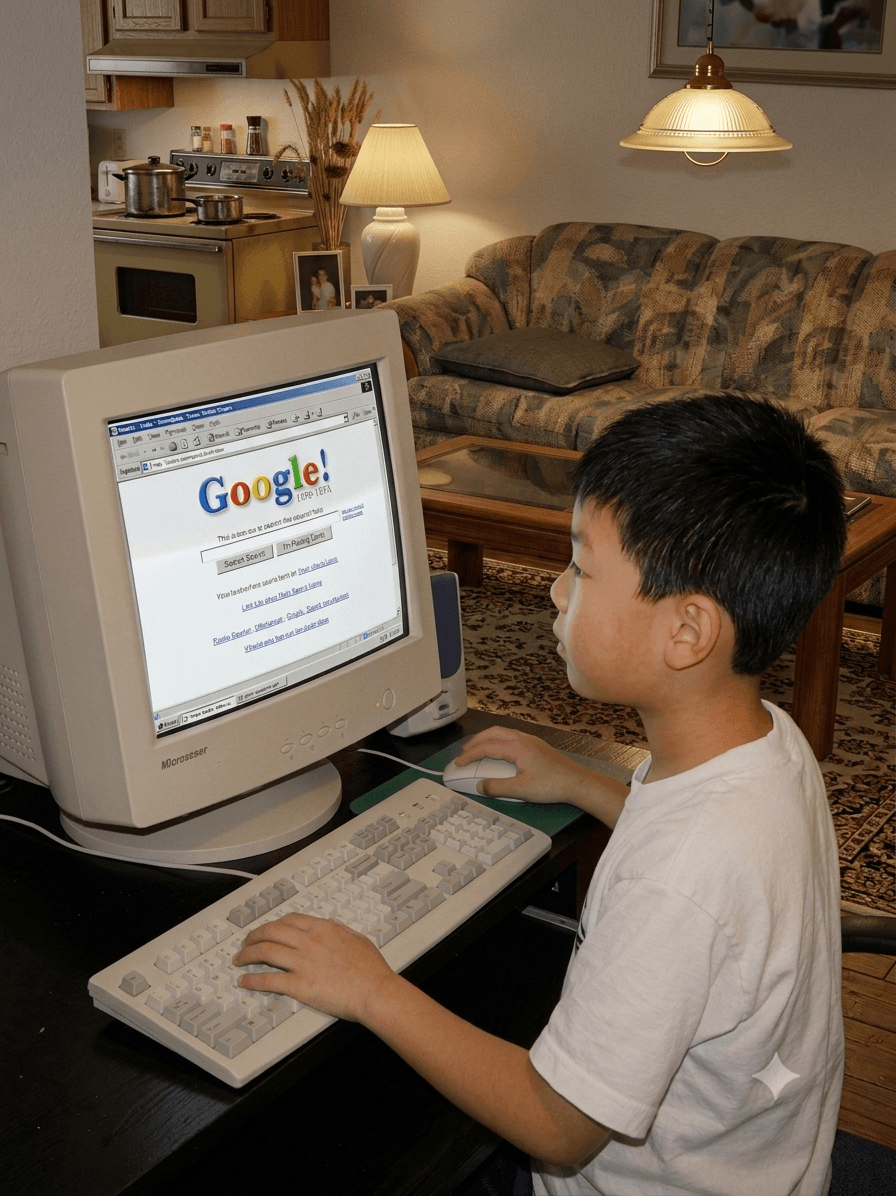
My kids will never know a world without AI. One day they’ll ask me what life was like before it, the same way I once asked my parents what life was like before television. We’re one of the last generations who will remember the before.
I hear a lot of worry that AI is making the younger generation lazy or eroding their critical thinking. I don’t buy it. We said the same thing about calculators, then Google, then Wikipedia. Socrates worried that writing itself would ruin our memory. Every generation panics about the tools the next one grows up with and every generation adapts.
The kids will be fine. I grew up with computers and my parents were scared I’d forget how to spell because the machine fixed every mistake for me. I can still spell just fine (though autocorrect quietly has my back). The kids will figure it out too.
We Need Both Sides#
There will keep being waves of people who push back on AI and waves of advocates cheering it on. Honestly, I think we need both. If the advocates run unchecked, the technology moves faster than people can adapt. The skeptics are the brakes and brakes aren’t there to stop the car. They’re there so you can drive fast without crashing.
My parents may never love AI. But maybe one day they’ll snap a photo of a confusing letter, ask a question and get an answer in their own language. They probably won’t call that AI. They’ll just call it helpful.
That would be enough for me.
Sources
[1] Microsoft AI Economy Institute, Global AI Adoption 2025
[2] EBSCO Research Starters, Negativity Bias